
I. A Prayer For Motherhood In A Digital Age
Almighty and Everlasting Creator, You are the Divine presence who observes humanity in the harshest wilderness and gathers the vulnerable under wings of ultimate refuge.
We come before You to lift up the mothers and children of the current generation.
We ask that You would bestow upon mothers the perfected faith of Sarah and the unwavering, resilience of Hagar.
Grant them the fervent, world-altering prayer life of Hannah, the tactical defiance of Jochebed, the courageous advocacy and leadership of Esther and Deborah, the redemptive mentorship of Naomi, the absolute submission of Mary, and the unfeigned, generational devotion modeled by Lois and Eunice.
Give them the hope of Eve, Leah, and Rahab, trusting You to redeem the broken chapters of their family lives.
Lord, for the mothers who find themselves deeply weary, navigating the compounding, heavy burdens of modern professional life and the unending, cyclical nature of digital demands, we ask for the comforting presence of Your Holy Spirit.
Where the severe toll of digital distraction, recursive anxiety, or emotional absence has fractured the domestic sphere, we pray for miraculous deliverance, systemic healing, and the permanent restoration of deeply present, unified family bonds.
Break the psychological chains of compulsive digital habits, provide sanctioned spaces for true cognitive rest, and replace the spirit of modern, technologically induced anxiety with the enduring peace of divine salvation.
Father, we intercede for the children of this era, who are continually bombarded by the incessant noise of a digital world and the subtle, algorithmically targeted influences of unseen bad company.
Guard their developing minds and fiercely protect their hearts. Raise up spiritual mentors like Naomi and the Apostle Paul, to actively guide those who feel overwhelmed, marginalized, or neglected by a screen-tethered culture.
Give parents the courage to establish righteous, nonnegotiable limits and boundaries, to stand firmly against the relentless tide of cultural distraction, and to reclaim their homes as sacred sanctuaries of worship and genuine interpersonal connection.
We ask that every family receive the ultimate and perfect gift from above—the gift of divine illumination, unfeigned faith, and eternal life in Christ Jesus—so that homes may continually reflect divine love and children may walk safely in the light of absolute truth all the days of their lives in Jesus holy name we pray. Amen.
II. Digital Vices and the Tech-Tethered Home

The struggles faced by mothers in antiquity—which included physical barrenness, literal famine, systemic sociopolitical marginalization, and the immediate threat of violence—have not disappeared; rather, they have evolved into highly sophisticated, technologically mediated forms of psychological and spiritual warfare.
For today’s families, and particularly for women navigating the compounding demands of the modern workforce alongside domestic duties, the new wilderness is entirely digital.
The contemporary family unit is deeply threatened not necessarily by physical abandonment, but by the pervasive, monetized, third-rate, clickbait-driven influence of digital vices and the advanced technology continuously rolled out in modern architecture, runway software releases.
Professionals and women operating within the technology sector understand intimately that screens are not neutral tools; rather, they are complex, adversarial ecosystems meticulously designed to capture, manipulate, and monetize human behavior at the granular level.
The Attention Economy, Algorithmic Feeds, and Informational Entropy
Modern society exists within an aggressive “attention economy” where sophisticated algorithms, endless scrolling interfaces, and autoplay features are psychologically engineered to hijack cognitive focus.
This environment represents a modern battle for the mind, where the digital ecosystem actively and continuously competes with a mother’s foundational influence over her household.
When children and parents alike are tethered to automated feeds designed to provoke outrage, foster social competitive comparison, or provide endless superficial entertainment, the family’s spiritual and intellectual life is systematically starved of quiet contemplation.
The biblical imperative demands active, calculated resistance against being shaped by the engineered patterns of such digital environments. Romans 12:2:
“And be not conformed to this world: but be ye transformed by the renewing of your mind, that ye may prove what is that good, and acceptable, and perfect, will of God.”
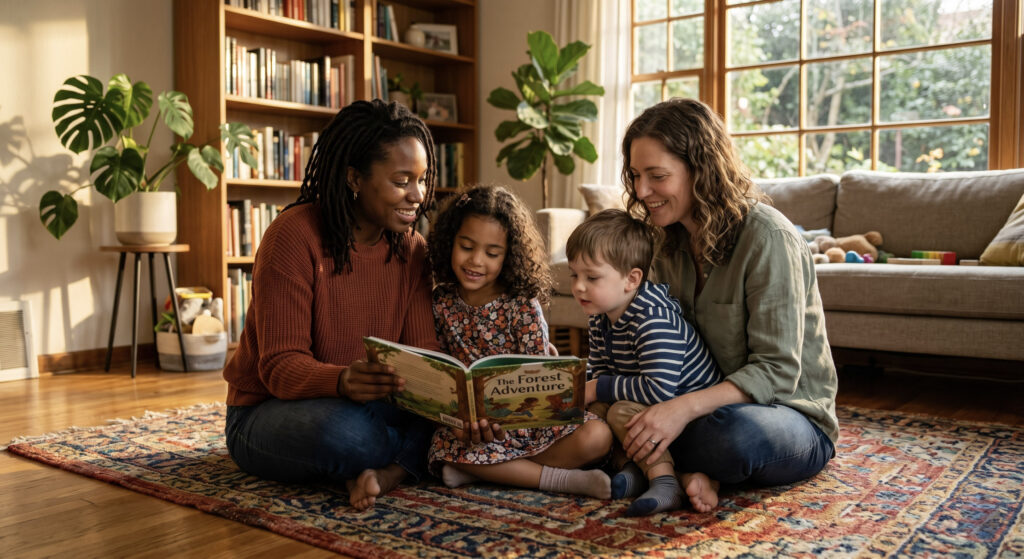
In a technology-saturated home, resisting the “pattern of this world” necessitates deliberately curating digital inputs so that the minds of the household—and particularly the developing minds of children—are renewed by objective truth rather than programmed by an optimization algorithm designed solely for user retention.
This continuous digital engagement operates within a highly complex polysystemic network in which neurological, biological, psychological, social, and anthropological dynamics intersect.
In the modern information environment, individuals suffer increasingly from informational entropy—an overload of conflicting, uncontextualized data that disorganizes human cognitive appraisal systems and exacerbates epistemic instability.
This surplus of raw data destabilizes existing schemas and actively reinforces recursive anxiety-search cycles, a phenomenon frequently observed in clinical behaviors such as cyberchondria and endless algorithmic consumption, ultimately undermining the collective well-being that depends on the effective governance of the information cycle.
Recursive Anxiety, Tech Exhaustion & Burnout Triad

Research across psychological and developmental disciplines demonstrates that parents are experiencing profound levels of “recursive anxiety”—a deep, pervasive exhaustion born directly from the endless, cyclical demands of technology parenting.
The interaction between human cognition and digital ecosystems is inherently recursive; anxiety narrows attentional scope and severely reduces working memory span, while subsequent performance decrements are interpreted as low self-efficacy, thereby amplifying anticipatory anxiety and creating a self-reinforcing, inescapable cycle of distress.
Parents are constantly forced to renegotiate boundaries as technology rapidly evolves, continually attempting to outsmart platforms that were never designed with the family’s psychological well-being or spiritual cohesion in mind.
For mothers acting as the primary guardians of the home, this environment can produce a clinically recognized burnout triad: profound emotional exhaustion, rising cynicism toward digital culture, and sharply reduced efficacy in parenting interventions.
This triad is often accompanied by silent disengagement and co-occurring anxiety or depressive symptoms.
It is a grueling, unseen labor that leaves many caretakers feeling utterly defeated. Yet historical wisdom and theological frameworks offer precise encouragement for this very kind of unseen, repetitive domestic hard work. Galatians 6:9 provides a critical exhortation:
“And let us not be weary in well doing: for in due season we shall reap, if we faint not.”
Guarding the digital boundaries of the home is undeniably exhausting, but it constitutes a vital, sacred form of “well doing.”
Establishing strict technology curfews, enforcing phone-free zones, and relentlessly auditing a family’s technology habits are acts of fierce, protective maternal love.
Even when the broader culture vigorously pushes back against these restrictions, the spiritual harvest of a protected, deeply connected family justifies the immense endurance required.
The Digital Surrogate

With the rapid ascension of artificial intelligence companions, hyper-personalized digital feeds, and ubiquitous global networks, children are no longer merely looking at passive screens; they are being actively influenced by an algorithmic “surrogate.”
When a mother’s authoritative voice is drowned out by the sheer volume and psychological targeting of digital media, the internet steps in as a false authority, covertly dictating a child’s foundational values, identity, and ultimate self-worth.
The proliferation of these simulated, virtual realities poses grave psychological and moral dangers that extend far beyond simple distraction.
When digital agents within simulated worlds or AI chat interfaces behave convincingly—expressing synthetic emotion, pleading for survival, or forming simulated interpersonal bonds—a deliberate cognitive act of distancing is required for the human user to treat them as digital entities.
Over time, this psychological distancing becomes deeply habitual, causing the user’s moral imagination to falter and leading to severe patterns of desensitization.
This recursive anxiety regarding digital entities amplifies the ethical imperative for absolute caution, as prolonged exposure to artificial environments fundamentally alters human empathy, interpersonal attachment, and the basic habits of domination.
The early church received heavy, prophetic warnings regarding false teachings capable of taking a human mind completely captive, as noted in Colossians 2:8:
“Beware lest any man spoil you through philosophy and vain deceit, after the tradition of men, after the rudiments of the world, and not after Christ.”
In contemporary society, the “tradition of men” and the “rudiments of the world” are literally coded into the software that youth consume daily.
It is incumbent upon mothers to teach rigorous digital discernment, recognizing that the corrupting influences warned about in scripture no longer wait on a physical street corner—they reside directly in the hands of youth, programmed to continually distort their understanding of fundamental divine truths.
The “Always-On” Culture

The proliferation of remote work and the expectation of constant connectivity have fundamentally blurred the definitive lines between professional obligations and sacred family life.
This paradigm shift has birthed the modern phenomenon of being physically present but “digitally absent”—a state in which a parent is physically in the room but entirely absorbed in staring at a screen, responding to professional messaging applications, or clearing an inbox.
This divided presence can inadvertently mimic the severe emotional abandonment observed in more traditional, physical forms of neglect, signaling to the child that they are perpetually secondary to the digital notification.
Christ Himself spoke directly to the impossibility of a divided heart and the ultimate currency of human devotion, as articulated in Matthew 6:24:
“No man can serve two masters: for either he will hate the one, and love the other; or else he will hold to the one, and despise the other. Ye cannot serve God and mammon.”
While “mammon” refers to wealth and material accumulation, in the digital age, the greatest and most scarce currency traded is human attention.
It is functionally impossible to simultaneously serve the immediate, manufactured demands of digital notifications and the sacred, foundational emotional needs of children.
Establishing rigid, nonnegotiable limits and boundaries around devices has thus become a mandatory modern act of spiritual discipline.
Strategic Christian Intervention and Establishing Digital Boundaries

To successfully combat the digital usurpation of the maternal role, rigorous guidance emphasizes active, spiritually grounded parenting that reclaims narrative control over the household. Ephesians 6:4:
“And, ye fathers, provoke not your children to wrath: but bring them up in the nurture and admonition of the Lord.”
This command necessitates that all caretakers actively reclaim their authority over the digital environment, refusing to cede territory to the algorithm.
In treating highly reactive environments where recursive anxiety is prevalent, psychological literature occasionally notes the utility of paradoxical interventions—strategies where a patient is encouraged to maintain or increase a feared behavior to reduce its forbidden appeal.
That technique has historically been utilized by figures like Milton Erickson and Viktor Frankl for treating sleep difficulties and severe anticipatory anxiety.
However, while such interventions show efficacy for adults, establishing firm, unwavering structural boundaries remains the primary, non-negotiable defense mechanism for child development and domestic stability.
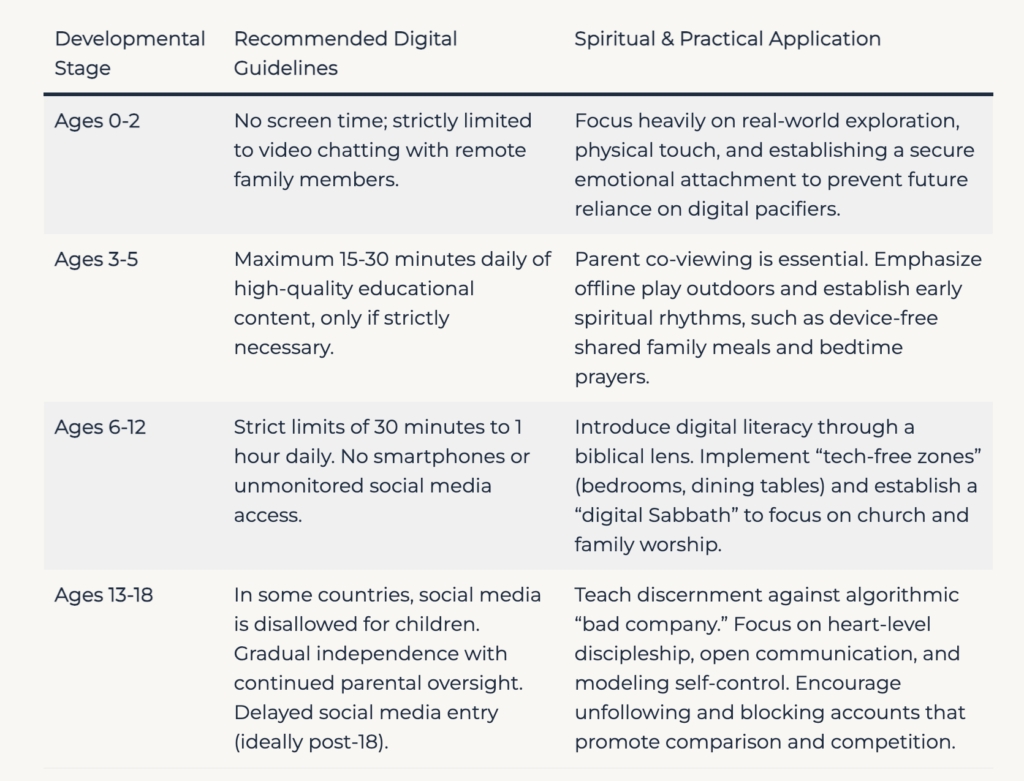
Mothers and caretakers must systematically reclaim their definitive role as the primary influencers of their children.
This requires parents to rigorously audit their own technology habits, recognizing that children build enduring cognitive models by closely observing parental behavior.

By actively prioritizing church attendance, shared home library reading times as a family, outdoor activities, and uninterrupted, consistent family worship and bible study time, mothers/parents guard the developmental and spiritual well-being of the youth.
It is the responsibility of the family unit to raise hardworking, responsible, law-abiding citizens.
Proverbs 4:23 commands:
“Keep thy heart with all diligence; for out of it are the issues of life.”
Guarding the heart in the modern age strictly includes the rigorous, uncompromising curation of the digital environments children inhabit.
If a child internalizes messages of inadequacy from the digital space, the parent must actively counter them by providing life-affirming truth and teaching the child to continually prioritize the voice of God, the only Creator, over the voice of the algorithm.
III. The Creator’s Maternal Nature
The Divine Parent: Embodying Both Father and Mother

While Mother’s Day is a beautiful celebration, it can also be a season of grief for those who have experienced neglect, abandonment, or the loss of a parent.
Yet, scripture offers a breathtaking promise for these exact moments in Psalm 27:10: “When my father and my mother forsake me, then the LORD will take me up.”
This verse acknowledges the painful reality that even the most secure earthly relationships and blood ties can sometimes fracture in a fallen world .
When human bonds fail, God gathers the brokenhearted, providing the release, healing, and acceptance they desperately need.
In this divine embrace, the Creator acts as both a perfect father and a comforting mother to the orphaned soul.
Historically, the early Church deeply understood this dual nature of God’s love. Theologians recognized that the Creator transcends human biological sex, seamlessly embodying both paternal authority and maternal compassion.
Clement of Alexandria beautifully articulated this mystery, writing that while God is Father in His ineffable essence, “in His compassion to us He became Mother”.
Because God possesses this complete, boundless nature, He purposefully created both men and women to reflect different aspects of who He is.
Genesis 1:27 declares, “So God created man in his own image, in the image of God created he him; male and female created he them.”
This profound language reveals that the Imago Dei image of God is not meant to be viewed merely individualistically, but communally in His Image.
Just as God Himself exists within a loving community, mankind bears God’s image through their family relationship.
Both male and female are absolutely essential to this divine design; together, they jointly and equally reflect the full, complex, and loving nature of our Creator.
The conceptualization of motherhood within the biblical narrative transcends mere biological function; it operates as an overarching theological construct that reflects the very nature of God.
To properly comprehend how the Creator views motherhood, one must first recognize how the Divine routinely assumes maternal attributes to communicate unfathomable comfort, fierce protection, and nurturing love to humanity.
Throughout the scriptural canon, God is not bound exclusively to paternal metaphors.
The prophetic traditions continually employ striking maternal imagery to describe the covenantal relationship between the Creator and the chosen people, revealing a heart of nearness and tender empathy that stands in sharp, deliberate contrast to the distant, emotionless, and often capricious deities of pagan idolatrous nations.
His Compassion: Rachamim and Rechem
The very language of scripture weaves the essence of motherhood directly into the character of God.
The Hebrew word for compassion, rachamim, is directly derived from the root rechem, which translates literally to “womb.”
This linguistic connection reveals that divine mercy is never merely a cognitive or emotional sympathy, but an active, deeply nurturing love fundamentally comparable to a mother protecting the life she physically carries within her own body.
Similarly, the foundational Hebrew word for mother, Em (אֵם), signifies the origin point or the foundational source of life and wisdom, historically understood in antiquity as the essential, unshakeable force that binds the family structure together.
Maternal Imagery in the Old Testament
The prophet Isaiah presents one of the most striking and intimate maternal depictions of God.
Isaiah 66:13:
“As one whom his mother comforteth, so will I comfort you; and ye shall be comforted in Jerusalem.”
In the specific historical context of this passage, God’s precious people, Israel, had endured immense suffering, displacement, and national trauma.
Historical analysis indicates that the mother referenced in the preceding verses is metaphorically Sion, and the “man-child” born without the travail-pangs of sorrow represents the restored Israel, the beloved firstborn son of the living God.
In verse 13, however, the metaphor is explicitly and powerfully directed to the Creator.
By utilizing the image of a mother comforting her child, the Divine reveals a heart of nearness, providing a deeper, more accessible look into what God’s comforting heart truly means for the afflicted.
The minor prophets similarly employ this maternal imagery to demonstrate God’s gentle, patient instruction and daily provision.
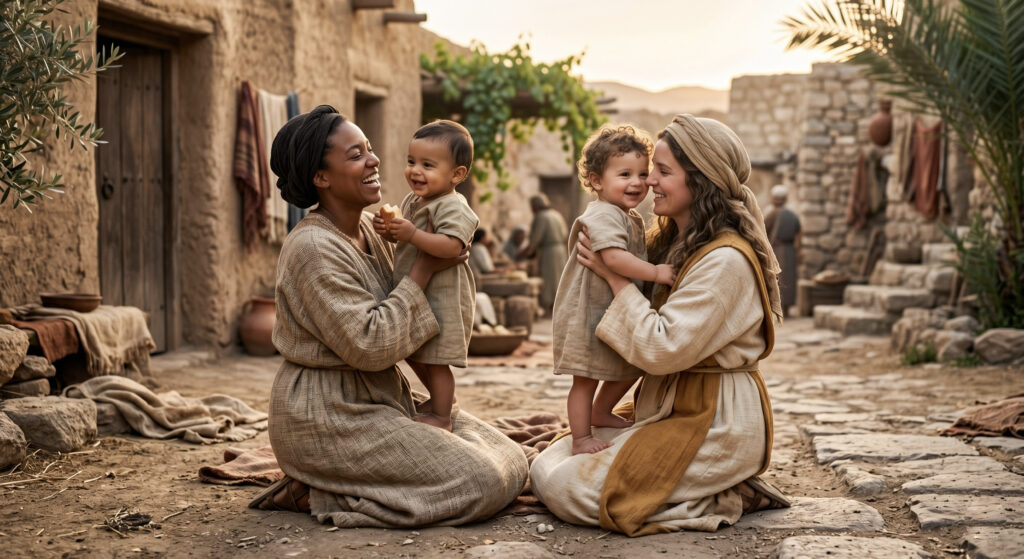
Hosea 11:3-4:
“I taught Ephraim also to go, taking them by their arms; but they knew not that I healed them. I drew them with cords of a man, with bands of love: and I was to them as they that take off the yoke on their jaws, and I laid meat unto them.”
Here, God is beautifully likened to a mother patiently teaching a toddler to walk, tenderly lifting the child to her cheek, and bending down to feed them.
This reveals the Divine in ways intimately understandable through the universal human experience of maternal nurture.
When reading such verses, I find tears in my eyes, almost crying out “Mama,” recognizing the precious intimacy offered by the Creator, our God, our everything.
New Testament Empathy

The New Testament echoes this fierce, protective maternal instinct meticulously.
When the Lord, Jesus Christ, came to willingly atone for the whole world, He spoke to beloved Israel in Jerusalem regarding His desperate desire to protect the people. He adopted the imagery of a mother hen in Matthew 23:37:
“O Jerusalem, Jerusalem…how often would I have gathered thy children together, even as a hen gathereth her chickens under her wings”
This metaphor denotes a fierce, self-sacrificial protection for His beloved brothers and sisters.
This active divine compassion is expressed in the New Testament Greek through the highly specific verb splanchnizomai in the Synoptic Gospels (Matthew, Mark, and Luke).
This term is derived from splanchna, indicating the internal organs, the viscera, the heart, the lungs, the liver, and crucially, the mother’s womb.
It represents the absolute strongest word available in Koine Greek for the expression of human emotion, signifying a state of being completely churned up inside with empathy.
It is a guttural, maternal empathy originating from the deepest inward parts—a love that physically compels one to step in and alleviate the suffering of a precious beloved.
A literal translation suggests being “sick to the stomach” with compassion when encountering people in severe need.
This terminology underscores that divine mercy is intimately connected to a maternal capacity to deeply feel, internalize, and absorb the pain of another, establishing a five-fold manifestation of mercy based entirely on gut-wrenching empathetic love. Thank YOU, JESUS!
IV. The Maternal Divine

Historically, the early Church recognized these maternal attributes as foundational to understanding the Divine nature properly.
Early theologians seamlessly integrated maternal metaphors into their high theology, refusing to limit the Creator to exclusively patriarchal terms.
Clement of Alexandria (150–215 AD), operating from the intellectual center of Christian culture and the catechetical school in Alexandria, articulated this beautifully in his renowned work Who is the Rich Man That Shall Be Saved?
Clement recognized that God is fundamentally love, stating: “In His ineffable essence He is Father; in His compassion to us He became Mother.
The Father by loving became comforting: and the great proof of this is He whom He begot of Himself; and the fruit brought forth by love is love”.
Clement viewed the incarnation and divine condescension as the ultimate acts of a maternal love willing to voluntarily subject itself to the experiences of humanity, bringing the Divine down to the measure of human weakness.
Augustine of Hippo (354–430 AD) wrote extensively that God nourishes humanity with a mother’s tenderness, noting that the Divine provides heavenly food much like a mother nourishing a child on milk.
Gregory of Nyssa (335–395 AD), in his complex theological treatise Answer to Eunomius’ Second Book, posited that God adapts to humanity’s limited intellectual capacity much like a “tender mother who joins in the inarticulate utterances of her babe”.
By babbling with the infant, the mother provides human nature with exactly what it is capable of receiving; thus, God speaks in human language and assumes relatable emotions to lead infantile human life safely by the hand toward divine truth.

Centuries later, Teresa of Avila utilized explicit breast and womb metaphors to describe God’s closeness, viewing the Divine as the physical, sustaining force for the human soul.
Therefore, the biblical expectation for human mothers is deeply and irrevocably rooted in this exact divine nature.
To mother is to give life, to nurture, to protect fiercely, and to physically embody the comforting, visceral presence of God in an otherwise fractured, hostile world.
V. Divine Expectations For Mothers
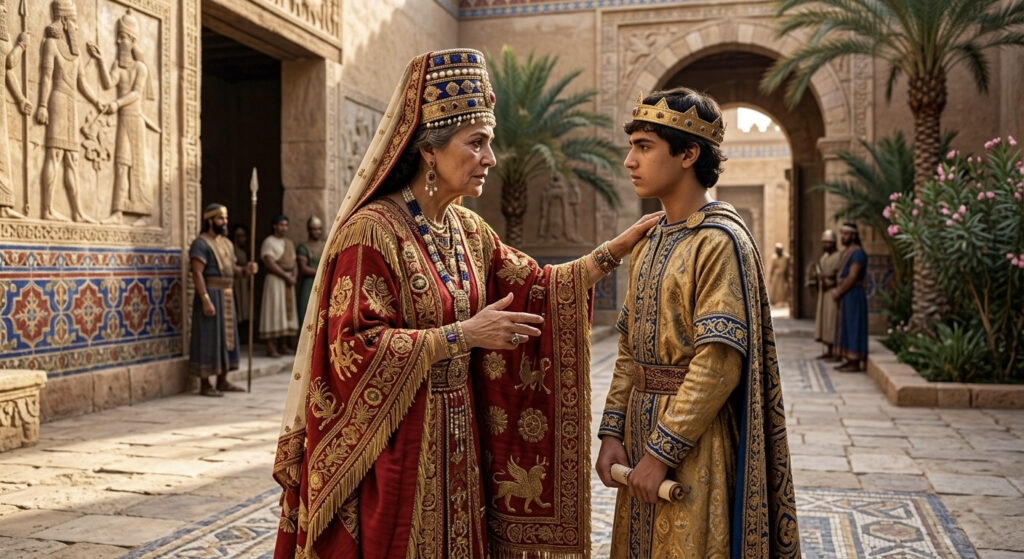
The clearest, most definitive articulation of God’s rigorous expectations for mothers is found in the wisdom literature of Proverbs 31, which presents an exhaustive, multifaceted portrait of a virtuous woman and mother.
The chapter opens with an explicit acknowledgment of a mother’s teaching, demonstrating the supreme authority vested in maternal instruction. Proverbs 31:1-3:
“The words of king Lemuel, the prophecy that his mother taught him. What, my son? and what, the son of my womb? and what, the son of my vows? Give not thy strength unto women, nor thy ways to that which destroyeth kings.”
Lemuel is historically understood by biblical scholars as the “king of Massâ”.
The instruction delivered by his mother is formally categorized as a “prophecy,” indicating profound foresight imparted by divine inspiration or deep natural sagacity designed to prevent the sins her son would inevitably be tempted by.
This passage underscores the immense veneration afforded to mothers in the ancient Near East, where the “queen-mother” held a rank of distinguished authority, often exceeding the influence of a king’s principal wife.
Biblical exegesis highlights the extreme anxiety of the mother to impart righteous advice to the son she views as tender and uniquely beloved.
Her reference to him as the “son of my vows” suggests that Lemuel, much like the prophet Samuel, was granted to his mother in direct answer to fervent prayers and strict vows made to the Lord.
Her expectations establish a profound, unyielding standard for maternal influence across four distinct societal domains:
First, there is the absolute expectation of moral guardianship.
The mother acts as a prophetic voice, actively warning her child against dissipation. She explicitly cautions against the ruinous indulgence in strong drink—the “drink of kings”—which perverts justice, and against surrendering strength to the bad company of deceptive relationships that destroy leadership and moral clarity.
Second, there is the expectation of relentless advocacy.
The mother instructs her child to champion innocent, law-abiding citizens who are helpless in the face of systemic injustice. Proverbs 31:8-9:
“Open thy mouth for the dumb in the cause of all such as are appointed to destruction. Open thy mouth, judge righteously, and plead the cause of the poor and needy.”
She demands that her offspring utilize their power and position to protect those subjected to high-handed oppression.
Therefore, when one encounters an antisemite, or any individual harboring deep malice, it becomes exceedingly clear that their mother did not raise them the way the Creator expects women to raise the children entrusted to them.
A mother is mandated to teach her offspring how to speak up for those who are unjustly treated and to forcefully reject the clickbait propaganda lies prevalent in modern digital spaces.
Third, there is the expectation of industrious provision and strategic household management.
The description of the “virtuous woman” translates from the Hebrew Eshet Chayil or ishshah chayil, denoting a “woman of strength.”
The word chayil carries primary meanings of military might, bravery, and immense physical strength, proving definitively that biblical motherhood is never passive but requires immense courage and operational resilience.
She rises “while it is yet night,” engaging in strategic financial stewardship, acting like “merchants’ ships,” investing the fruit of her hands in planting vineyards, and ensuring her household is clothed in scarlet to provide warmth and dispel the fear of the bitter winter.
Scholars universally observe that this specific phrase combines the ideas of moral goodness with intense bodily vigor and sustained activity. She is physically fit and prioritizes her spiritual, emotional, and physical health.
Fourth, there is the expectation of an immovable spiritual foundation.
Above all domestic chores and logistics, she “openeth her mouth with wisdom,” guiding her family with the “law of kindness,” and caring for the higher spiritual interests of her household.
Her supreme defining characteristic is that she “feareth the LORD,” which is the ultimate foundation that makes her societal praise real, enduring, and spiritually significant.
God expects mothers to be foundational pillars of moral instruction, industrious caretakers, and spiritual anchors for their families, directly reflecting the nature of God Himself.
An individual’s biological mother is irreplaceable; she has no competitor and cannot be cloned. If she is in eternity, elder sisters, maternal aunts, or grandmothers often step in to offer necessary comfort, and a legally adopting mother can fulfill this divine mandate gloriously.
VI. Biological Matriarchs: Faith, Struggle, and Divine Encounters
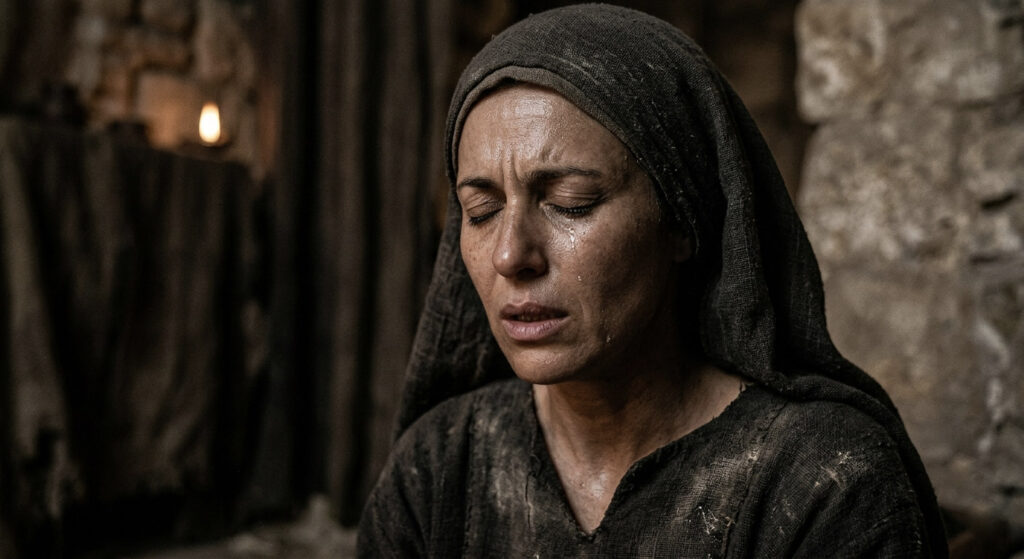
The biblical narrative provides a vast, deeply complex tapestry of women who assumed the mantle of motherhood through biological birth.
Their lives were not marked by pristine perfection, but by agonizing prayer, complex vulnerabilities, astonishing triumphs, and direct divine encounters.
Through their specific historical journeys, it becomes apparent how mothers in antiquity heard the voice of God and navigated the excruciating trials of their respective eras.
Hagar: The Mother Seen by God in the Wilderness
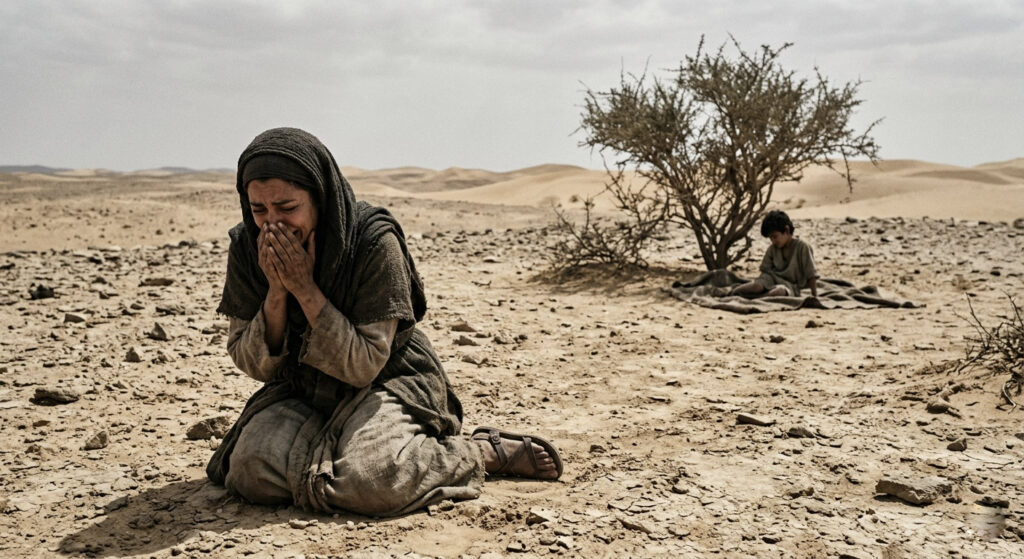
Hagar’s narrative provides a highly poignant exploration of single motherhood, systemic marginalization, and divine encounter.
An Egyptian maidservant and surrogate, Hagar fled into the wilderness to escape mistreatment. It was in the absolute desolation of the desert that she experienced a theophany.
Genesis 16:13:
“And she called the name of the LORD that spake unto her, Thou God seest me: for she said, Have I also here looked after him that seeth me?”
Hagar holds the immense theological distinction of being the first person in scripture to bestow a name upon God—El Roi, the God who sees.
Years later, Hagar was permanently cast out with her son, Ishmael. As the water supply in their skin vanished, she faced the ultimate psychological despair of a mother watching her child perish, wandering without sufficient knowledge of the locality.
Genesis 21:16:
“And she went, and sat her down over against him a good way off, as it were a bowshot: for she said, Let me not see the death of the child. And she sat over against him, and lift up her voice, and wept.”
Scholars observe the touching agony of the “wild Egyptian” who, unlike a softer nature that might have remained to soothe the child, could not bear to remain by her fainting child’s side, casting him almost angrily under a shrub. She gave way to unrestrained outcries of grief.
However, divine compassion intervened. Genesis 21:17:
“And God heard the voice of the lad; and the angel of God called to Hagar out of heaven, and said unto her, What aileth thee, Hagar? fear not; for God hath heard the voice of the lad where he is.”
Following this, God opened her eyes to see a well of water. A striking theological shift occurs here regarding how she heard from God:
In Genesis 16, it was the “angel of Jehovah” (the covenant God of Abraham) who appeared. But in Genesis 21, while she is completely separated from the covenant family, it is the “angel of Elohim” (the universal Creator) who intervenes to save her and her son.
It was not Hagar’s loud lamentations that moved heaven, but the “mute prayer of Ishmael” that was heard.
Hagar’s ultimate strength lay in her immense resilience, the fierce love that drove her to the brink of madness for her child, and her immediate obedience to the divine voice, proving that God’s maternal care extends explicitly to the outcast, the abused, and the single mother navigating the wilderness.
Rebekah and Hannah: The Power of Maternal Intercession

The prayer lives of biblical mothers reveal a profound, desperate reliance on divine sovereignty over the biological functions of the human body.
Rebekah was initially the beneficiary of her husband’s intercession in Genesis 25:21:
“And Isaac intreated the LORD for his wife, because she was barren: and the LORD was intreated of him, and Rebekah his wife conceived.”
However, when she later experienced a turbulent pregnancy with twins struggling violently within her, she demonstrated her own robust theological agency by directly inquiring of the Lord, seeking divine wisdom for the struggles within her own womb.
Hannah’s prayer life is presented as one of the most detailed and instructive paradigms in the Old Testament.
Amid a period of grave national need for a pure priesthood lineage, Hannah is depicted as a remnant of the pious folk.
Deeply distressed by barrenness and the continuous domestic provocations of her rival wife, she traveled to the sanctuary at Shiloh and engaged in an act of spiritual communion. 1 Samuel 1:11 records her vow:
“O LORD of hosts, if thou wilt indeed look on the affliction of thine handmaid, and remember me, and not forget thine handmaid, but wilt give unto thine handmaid a man child, then I will give him unto the LORD all the days of his life, and there shall no razor come upon his head.”
Historical analysis highlights the composing, psychologically stabilizing influence of prayer in Hannah’s life. After pouring out her soul so fervently and silently that the High Priest Eli mistook her for a drunkard, she responded with modesty, reverence, and humility.
Having cast her burden completely upon the Lord, she was relieved, and her countenance was no longer sad.
Hannah’s unparalleled strength was her unyielding faithfulness to her vow. Upon the birth of Samuel (a name derived from Sh’muel, meaning “heard of God”), she delayed her journey to the sanctuary until the child was fully weaned—a period typically lasting three years in Hebrew antiquity.
Once the boy was weaned, she presented him to Eli (1 Samuel 1:28).
Linguistic analysis of her subsequent declaration, “I have lent him to the LORD,” clarifies that the Hebrew sense is accurately translated as: “I also make him one asked of the Lord; all the days that he liveth he is asked of the Lord,” signifying she was returning to God exactly what she had obtained through intercession.
Hannah handled her challenge by moving from deep emotional pain to absolute surrender, securing a spiritual victory that fundamentally altered the trajectory of Israel’s history.
VII. Maternal Defiance and Crisis Intervention
The historical narrative of Moses’ life is remarkably bookended by fierce acts of maternal defiance.
Just as God utilized the protective instinct of biological and adoptive mothers to save him in infancy, He utilized the intervention of his wife to save his family in adulthood.
Jochebed: Tactical Faith and Defiance

Jochebed, a descendant of the house of Levi, gave birth to Moses during an Egyptian state-mandated genocide of Hebrew male infants.
Her motherhood was characterized by desperate necessity and defiant, tactical faith.
She was the sister of Amram’s father, making her Amram’s kinswoman.
Recognizing the infant’s “goodliness” and beauty, she hid him for three months—the maximum duration he could be effectively concealed from the espionage of Egyptians living among the Israelites in Goshen.
When concealment became strictly impossible, she engineered an ingenious survival strategy. She took an ark of bulrushes (a papyrus chest), daubed it with mineral slime and vegetable pitch, and carefully placed it among aquatic flags by the river’s brink so it would not float away.
Jochebed’s strength resided in her strategic brilliance; she calculated exactly where the Egyptian princess bathed and placed the ark accordingly, merging deep faith with calculated human action.
Pharaoh’s Daughter: Compassion and Adoption

Pharaoh’s daughter represents the ultimate biblical archetype of the adoptive mother.
Upon discovering the child in the reeds, she defied her own Egyptian father’s decree out of pure, spontaneous compassion.
When Miriam approached and offered to find a Hebrew nurse, the princess agreed.
Exodus 2:9:
“And Pharaoh’s daughter said to her, Take this child away, and nurse it for me, and I will give thee thy wages.”
Scholars observe that the princess officially adopted the child, ironically paying Jochebed wages to nurse her own biological son.
Through this legal adoption, Pharaoh’s daughter provided Moses with the rigorous education and resources of an Egyptian prince, preparing him to become powerful in speech and action.
Thus, an adoptive mother provided the precise intellectual tools that the deliverer of Israel would eventually utilize to write the foundational texts of the biblical canon.
Zipporah: Decisive Action in a Spiritual Crisis
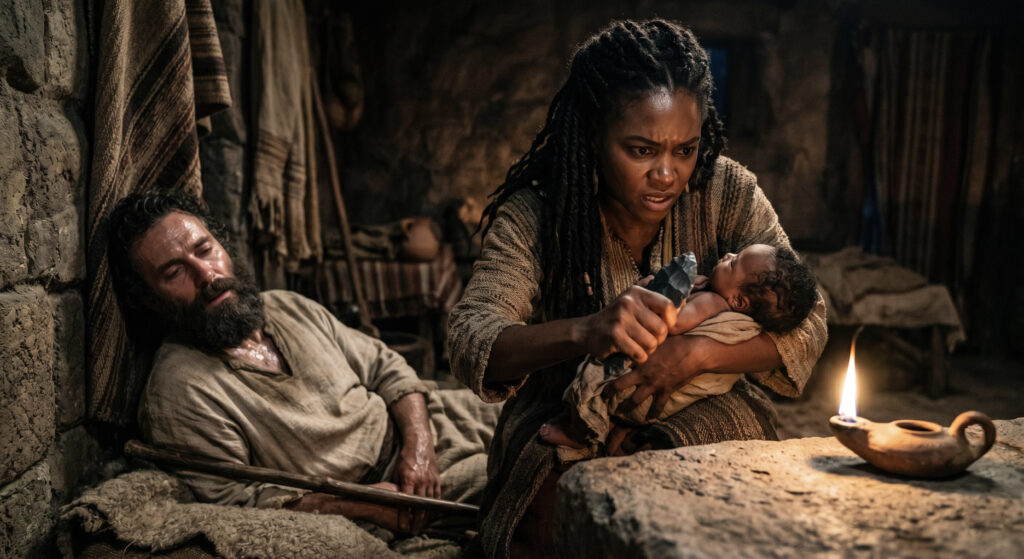
Years later, Zipporah, the Cushite wife of Moses, stands as one of the most fiercely protective matriarchs in the entire text.
Her defining moment occurs during a deeply mysterious, intense encounter on the journey back to Egypt.
God met Moses in anger, threatening his life, because Moses had severely neglected the covenantal requirement to circumcise his son.
Exodus 4:24-26 details the crisis. When the primary spiritual leader was suddenly incapacitated, Zipporah instantly stepped into the gap.
She took a “sharp stone” (a flint) and performed the bloody rite herself, casting it at his feet and declaring him a “bloody husband.”
God accepted her swift, decisive action as a removal of the cause of offense, letting Moses go.
Zipporah, as a Midianite, viewed this Hebrew rite being performed by a woman instead of a man as cruel and barbarous, making her action seem deeply petulant and reproachful.
Yet, her personal distaste did not prevent her from doing exactly what was required to save her family from destruction.
Zipporah models the decisive intervention required when a spiritual crisis threatens the home.
She proves that maternal discipline is rarely comfortable. Just as she had to engage in a messy, culturally uncomfortable act to protect her family, modern mothers must frequently perform the “messy” labor of parenting—such as enforcing strict digital boundaries or intervening aggressively against prevailing unhealthy cultural norms—even when it feels deeply uncomfortable.
VIII. Surrogate Mothers and Spiritual Matriarchs
Motherhood in the scriptural text is not restricted to the rearing of biological infants or formal legal adoption.
The narrative heavily honors women who assumed overarching maternal roles of leadership, mentorship, and hospitality, effectively acting as mothers to entire nations or vulnerable individuals in need.
Deborah: A Mother in Israel
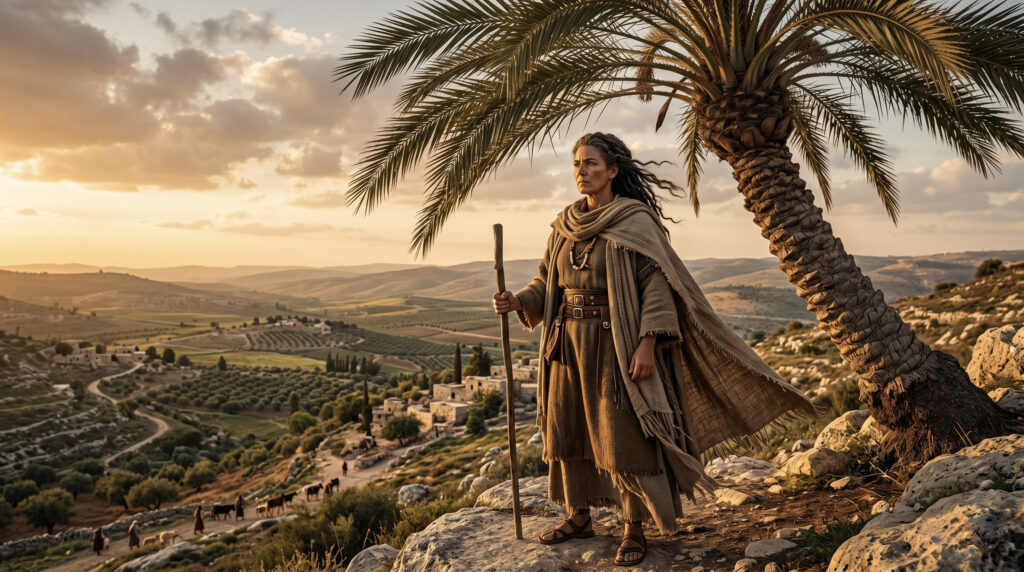
During a chaotic period of national challenge, Israel required strong, victorious leadership. Judges 5:6 notes that the highways were unoccupied, and travelers walked through byways.
Judges 5:7:
“The inhabitants of the villages ceased, they ceased in Israel, until that I Deborah arose, that I arose a mother in Israel.”
Historical analysis indicates that while heroic figures like Shamgar and Jael existed, their individual efforts were unavailing to deliver the nation from its enemies.
Deborah’s emergence marked the ultimate “Crisis of Deliverance.” She is identified not by her biological progeny, but by her fiercely protective, guiding, and authoritative role over the entire nation.
Scholars assert she was the sole author of Deborah’s song of victory, operating as a warrior-prophetess whose maternal instincts translated seamlessly into military and spiritual leadership, effectively mothering a fractured nation back to faith and geopolitical security.
Naomi: The Motherhood of Mentorship and Redemption
Naomi demonstrates how maternal influence extends deeply through mentorship and covenantal love, even following the devastating loss of biological offspring.
Having lost her husband and both sons in Moab, Naomi urged her daughters-in-law to return to their families.
Biblical scholars emphasize Naomi’s “all unselfish” love; although their company would have been a great solace, she urged them to return rather than sacrifice their futures on a long, toilsome journey to Judah.
Yet, Ruth’s extraordinary devotion to Naomi speaks volumes regarding Naomi’s character as a maternal figure.
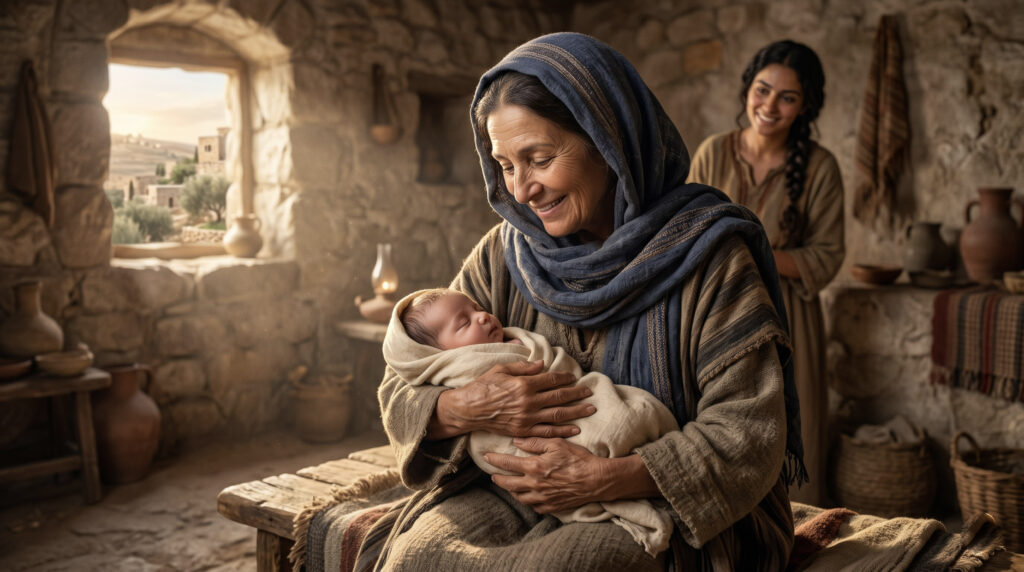
Upon their return to Bethlehem, Naomi orchestrated the levirate redemption of her family line through Boaz. When Ruth gave birth to Obed, the community formally recognized Naomi’s maternal role.
Ruth 4:16:
“And Naomi took the child, and laid it in her bosom, and became nurse unto it.”
Linguistic analysis reveals that the Hebrew verb used for “nurse” (aman) signifies a role of nurturing, guiding, and fostering, distinctly separated from literal biological nursing.
The word aman means to foster, support, and confirm, denoting the ongoing maternal role of a caregiver providing lifelong spiritual and emotional guidance.
Naomi stepped into an ongoing maternal calling, weaving a broken family back together.
The Shunammite Woman: Hospitality and the Gift of Life
The Shunammite woman in 2 Kings 4 exemplifies a maternal figure characterized by immense generosity, deep contentment, and sharp spiritual perception.
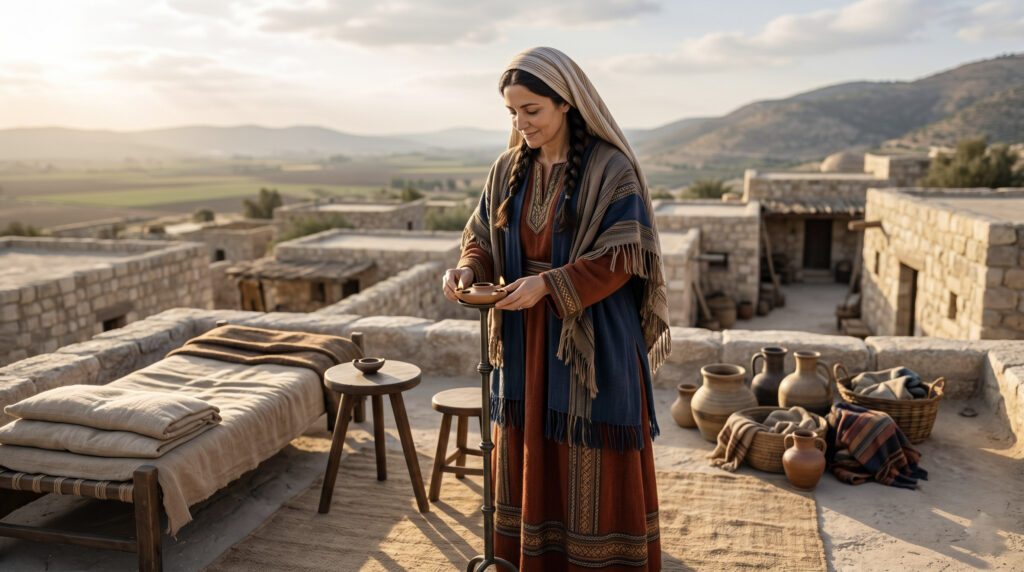
Recognizing the prophet Elisha as a holy man, she constructed a dedicated room for him upon her roof. When asked what could be done for her in return for her care, she replied with profound contentment:
“I dwell among mine own people” (2 Kings 4:13).
Despite having sought nothing, she was rewarded with the miraculous gift of a child. It is stressed that the child was in every respect the free gift of God.
When that child later suffered a sudden death, her immediate response was resolute, uncompromising action. She rode to Mount Carmel to seek the prophet, answering “It is well” to inquiries along the way (2 Kings 4:26).
Upon reaching Elisha, she bypassed the formal, cold-shielding guard servant, Gehazi, fell at the prophet’s feet, and assumed the posture of an urgent suppliant, pouring out passionate entreaties for help.
Her fierce, unrelenting determination ultimately led to the miraculous restoration of her son’s life.
Esther: Spiritual Motherhood, Advocacy, and Sacrifice

Although the biblical text does not explicitly detail her biological motherhood, Esther stands as a profound archetype of spiritual motherhood and fierce maternal protection.
As an orphan raised by her cousin Mordecai—who took her in and treated her “as if she had been his own child”—her story highlights the profound beauty and divine purpose of unconventional and adoptive families.
Her defining moment comes when she serves as the ultimate advocate for her people, essentially giving her nation new life by risking her own life.
Esther 7 highlights the immense sacrifice and strategic identification required in her advocacy. By pleading, “For we are sold, I and my people,” Esther made a confession of her nationality, sacrificing her security within the palace and deliberately tying her own fate to a race that was facing an imminent existential threat from haman.
Esther utilized calculated, confrontational advocacy against the antisemite, explicitly pointing to “this wicked haman” as the “adversary and enemy” who sought to afflict and distress her people.
She was a divine instrument for a “great and noble end” to bring about the ultimate deliverance of the Jews.
Esther’s narrative serves to remind caretakers that they are divinely appointed for their specific cultural moments, demonstrating that to be a mother or a father is also to relentlessly advocate and protect the vulnerable from systemic injustice and destruction.
IX. A Reflection on Earthly Motherhood
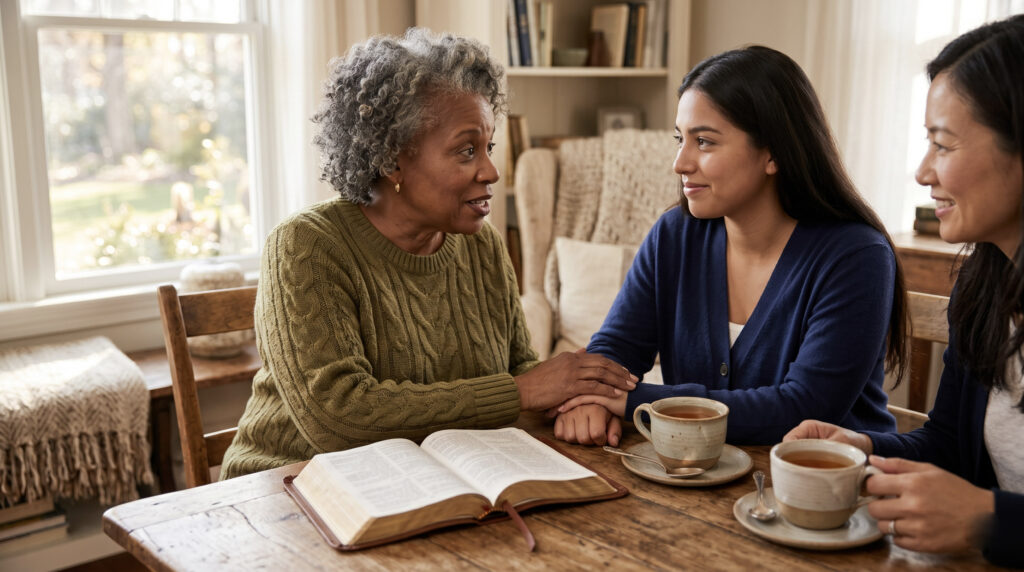
When reflecting upon the application of biblical motherhood, it is vital to recognize that the scriptural narrative embraces the fiercely protective, often painful realities of mothering.
The imagery of God’s motherhood extends far beyond gentle comfort to encompass fierce protection, comparing the Divine not only to a mother hen gathering her chicks, but to a mother eagle hovering over her young (Deuteronomy 32:11-12), and even a mother bear robbed of her cubs (Hosea 13:8), illustrating a divine, protective wrath against those who dare harm the vulnerable.
Furthermore, the biblical record is deeply honest about the traumatic struggles and perceived failures of earthly mothers, offering profound hope and redemption for women today:
- Eve: The First Mother’s Grief and Redemption. As the “mother of all the living,” Eve (whose Hebrew name Chavvah means “life” or “life-giver”) underscores the all-encompassing mandate of motherhood: to revive, preserve, and protect life in a fractured world.
- Having no earthly mother to turn to for advice, she endured the ultimate psychological heartbreak of losing her son Abel at the hands of her other son, Cain. Yet, God redeemed her tragic narrative by blessing her with Seth, whose bloodline eventually led to Jesus Christ.
- Leah: The Unloved Mother Seen by God. Leah was trapped in a loveless marriage and overshadowed by her beautiful sister Rachel. Yet, God saw her profound misery and blessed her with children, granting her the immense historical honor of mothering Judah—the tribe from which King David and the Messiah would descend.
- God redeemed her sadness and transformed it into an eternal generational blessing.
- Rahab: Changing the Family Tree. Rahab represents the ultimate unconventional mother. A prostitute, she courageously aligned herself to help the people of God selflessly.
- By acting decisively, she built a legacy of faith, becoming a direct ancestor of Jesus and proving that it is never too late for a mother to change the trajectory of her family tree when she selflessly offers kindness and help to stranded strangers.
These narratives remind women that perfection is never the biblical standard for motherhood; rather, the standard is enduring faith, reliance on divine protection, and an unwavering trust in the Creator to redeem the broken chapters of domestic life.
X. New Testament Matriarchs: Submission and Generational Legacy
In the New Testament, Mary, the mother of Jesus, stands as the paramount demonstration of submissive faith.
When the Archangel Gabriel announced her miraculous conception, Mary faced a bewildering prophecy.
Historical analysis indicates she was deeply perplexed because the prediction made no mention of her approaching marriage, which posed severe social and legal implications in a first-century Judean village.
The immediate peril of an unwed pregnancy flashed upon her soul.
Despite this terror, her prayer life was characterized by absolute, terrifying surrender.
Luke 1:38:
“Behold the handmaid of the Lord; be it unto me according to thy word.”
This act of absolute submission serves as an early echo of Christ’s own prayer in Gethsemane: “Not my will, but Thine be done.”
Mary accepted the agonizing reality that a “sword” would pierce her own soul (Luke 2:35) so that the thoughts of many hearts might be revealed.
Her subsequent prayer, the Magnificat, reveals a deep, robust theological grounding, mirroring the ancient song of Hannah. Luke 1:46-47:
“And Mary said, My soul doth magnify the Lord, And my spirit hath rejoiced in God my Saviour.”
She recognized her “low estate” as a village maiden, yet prophetically understood that all generations would call her blessed.
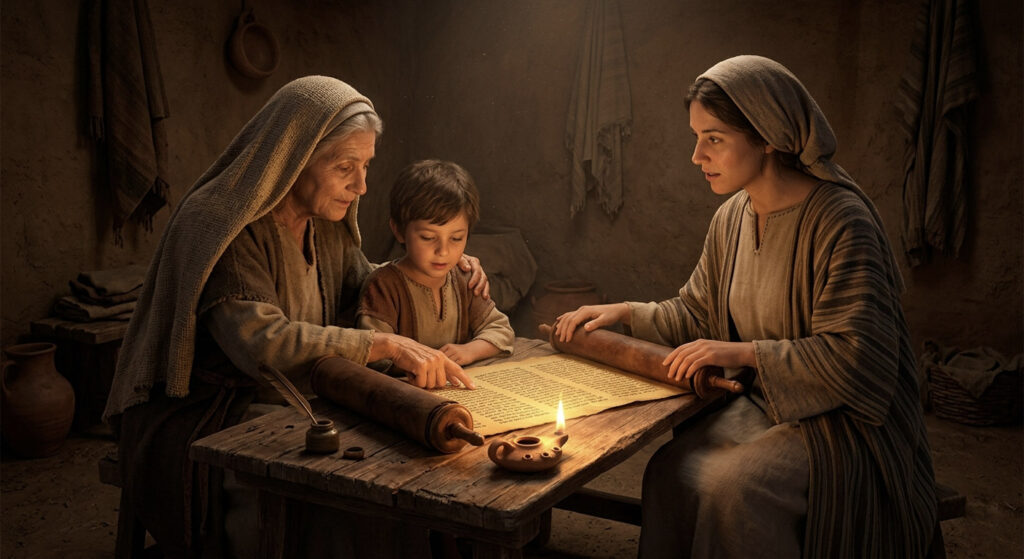
When examining the generational power of maternal instruction, the New Testament elevates Lois and Eunice. In 2 Timothy 1:5, the Apostle Paul writes:
“When I call to remembrance the unfeigned faith that is in thee, which dwelt first in thy grandmother Lois, and thy mother Eunice; and I am persuaded that in thee also.”
Scholars identify this lineage as part of a pious family at Lystra. Eunice (equivalent to the Latin “Victoria”), a Jewish believer married to a Greek, alongside her mother Lois (equivalent to “Lais”), faithfully instructed Timothy in the Scriptures.
Their quiet, daily modeling of the Christian life stands as a testament to the fact that true spiritual legacy is forged in the unseen, repetitive moments of domestic discipleship.
The Apostle Paul further expanded the maternal vocation in 1 Thessalonians 2:7, utilizing specific Greek language:
“But we were gentle among you, like a nursing mother taking care of her own children.”
Paul compares his own apostolic ministry to that of a “nursing mother,” utilizing the Greek word trophos (derived from trepho, meaning “to nourish”).
This highlights a mother’s gentle, affectionate self-giving and the immensely costly impartation of both physical and spiritual nourishment to her dependents.
The Exegesis of Teknogonia
Apostolic instructions regarding women and “childbearing” in 1 Timothy 2:15 utilize the highly specific Greek noun teknogonia.
A compound formed by combining teknon (child) with the root gen- (from gennao, to beget), the word morphologically signifies parturition, or the physical act of giving birth.
This was the refutation of Ephesian false teachings—where women were being heavily deceived by cults such as that of the goddess traditionally appealed to for safety in childbirth—the concept of teknogonia extends significantly deeper.
Exegetical analysis in this context shows that teknogonia encompasses “parentage, the performance of maternal duties,” and the lifelong commitment to rearing children.
It is linguistically and thematically linked to the expression oikodespotein (to keep house), serving as shorthand for a woman’s holistic, lifelong involvement in the domestic and spiritual spheres.
The deliverance, or “salvation,” referenced by the Greek term sozo in this passage, does not refer to spiritual justification but rather to being kept safe from the spiritual dangers of false teaching by embracing the divine priority of raising a godly seed.
This underscores the profound truth that a woman influences and shapes society powerfully from the bottom up through the rigorous performance of maternal duties.
XI. The Greatest Gift a Mother Can Receive

What about Mother’s Day gifts? Yes, let’s give and receive them! Throughout the breadth of the biblical text, mothers receive various immense blessings: legally adopted children, biological children, miraculous financial provision, and direct divine intervention.
However, a theological synthesis reveals that the absolute greatest gift a mother receives is never temporal or strictly biological, but eternal and deeply spiritual.
James 1:17:
“Every good gift and every perfect gift is from above, and cometh down from the Father of lights, with whom is no variableness, neither shadow of turning.”
Exegetical analysis of the original Greek structure of this verse notes that two distinct words are translated into English as “gift.”
The first word denotes the continuous, benevolent act of giving, while the second denotes the specific gift itself.
Together, they form a climax regarding the statement of God’s benevolence.
Firmly asserting that the “best” and “perfect” gifts are those that relate not to the present, fading life, but exclusively to grace: the imputation of righteousness, the remission of sins, divine adoption, and eternal life.
John 3:5 highlights the holy and best gift of divine illumination and saving faith.
When Mary received the prophecy of Christ’s birth, she received it fundamentally in faith. Scholars observe that it was entirely enough for her to know that her Child was the Son of God and the long-awaited Messiah.
Therefore, the greatest gift a mother in the biblical narrative receives is the spiritual gift of salvation, divine illumination, and the permanent indwelling of the Holy Spirit.

Consequently, as pastoral guidance frequently suggests, the greatest gift a Christian mother can give her children in return is to aggressively model a life that prioritizes the Kingdom of God and loves Christ supremely above all earthly attachments, algorithms, and cultural demands.
This spiritual inheritance is the only legacy guaranteed to completely outlast any temporal blessing, securing the family firmly in the eternal promises of the Creator.
Share the good news of the gospel with your mothers today and give them the gift of eternal life!
Today’s mothers are navigating a new kind of wilderness: a digital battleground where algorithms actively compete for our children’s hearts. Discover how the fierce faith of biblical matriarchs provides a timeless blueprint to reclaim your family from the attention economy and forge an unbreakable spiritual legacy.