A Gospel Before The Gospel
Passover Lamb Reel
The Passover narrative is one of the most profound and enduring accounts of deliverance, atonement, and divine providence in recorded history. In the ancient texts of the Old Testament, the Passover extends seamlessly into the New Testament, where it is typologically fulfilled in the person of the Lord Jesus Christ. In the contemporary era, the foundational principles of this narrative—courage, stewardship, sacrifice, and community deliverance—offer a robust framework for modern Christian women navigating the complexities of corporate leadership. The biblical architecture of redemption, when examined meticulously, provides not only eternal spiritual truths but also highly relevant operational paradigms for executive boardrooms, organizational management, and corporate culture.
Redemptive History
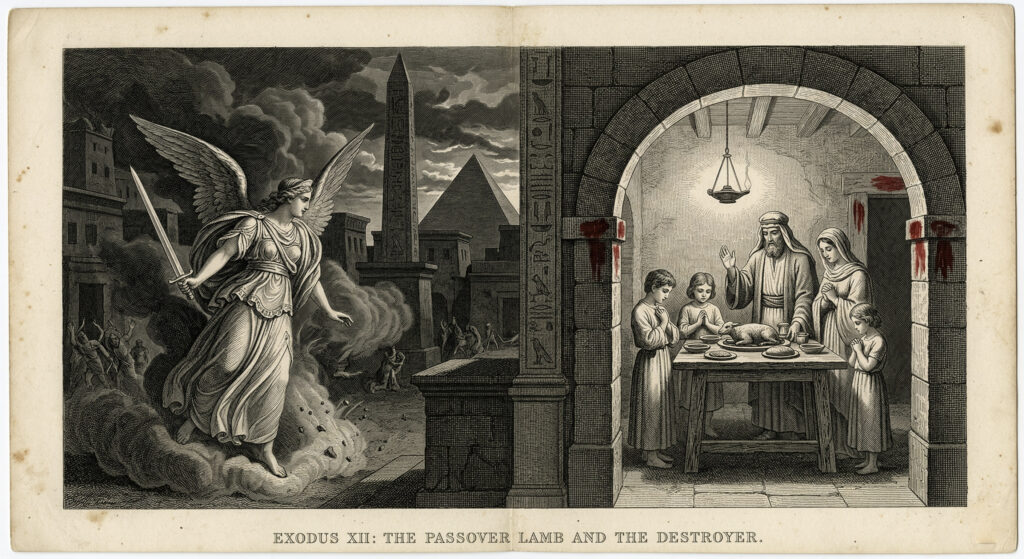
Lodged strategically between the catastrophic announcement of the death of the firstborn in Egypt and the subsequent physical deliverance of the Israelite nation, the institution of the Passover represents a calibrated communal sacrament. It serves not only as a mechanism for immediate physical preservation from divine wrath but as the architectural blueprint for the atonement that ultimately culminates in the New Testament revelation of the Lord, Jesus Christ.
The biblical typology involves historical events, persons, or institutions in the Old Testament that are divinely orchestrated to prefigure the realities of the New Covenant. The Passover is an expression of this framework, demonstrating that salvation history is neither random nor disjointed, but intricately woven by a sovereign intellect. Every physical element of the Exodus narrative was designed to communicate a future spiritual reality regarding the nature of sin, the necessity of a substitute, and divine grace.
Passover establishes the broad, immutable principles of atonement, sacrifice, and expiation through the shedding of blood, and the assurance of safety through the faith-driven application of a divinely appointed sacrifice.
The transition from the Old Testament type—an unblemished lamb slain to spare the firstborn from the destroyer, as the angel of death destroyed the Egyptian firstborns—to the New Testament—Jesus Christ, the Lamb of God, slain for the remission of sin—provides the indispensable framework for understanding Christian atonement. It functions as a proto-evangelium, a gospel before the gospel, communicating the parameters of salvation centuries before the incarnation.
Jesus Christ Our Lamb of God
The biblical text teaches that no single group of people took Jesus’ life from Him; rather, God allowed it as a substitutionary sacrifice to pay the penalty for human sin. The crucifixion was not an accident of history or merely the tragic end of a moral teacher; it was the focal point of divine decree.
The Apostle Peter confirmed this in his Pentecost address, declaring the sovereign architecture of the crucifixion in Acts 2:23 “Him, being delivered by the determinate counsel and foreknowledge of God, With the help of lawless Gentiles, you nailed him to a cross and killed him”
It is the accumulated sins of all humanity that made the crucifixion necessary, demanding a sacrifice capable of satisfying infinite justice. The Apostle Paul explains the nature of this act of penal substitution in 2 Corinthians 5:21: “For he hath made him to be sin for us, who knew no sin; that we might be made the righteousness of God in him”.
This exchange—the imputation of human sin to the sinless Christ, and the imputation of His righteousness to the believer—is the core of the atonement, perfectly foreshadowed by the lamb dying in the place of the firstborn.
Foundational Texts Of Old Testament Passover
In Exodus 12, the Passover instructions, given directly by God to Moses and Aaron, form the basis of both the historical event and the perpetual ordinance. The specificity of these instructions establishes a liturgy that serves simultaneously as an act of physical salvation and a detailed prophetic oracle.
The Institution of the Passover
The initial command structures the requirements of the sacrifice and the method of its application. Exodus 12:1-14 outlines these divine parameters: “And the Lord spake unto Moses and Aaron in the land of Egypt, saying, This month shall be unto you the beginning of months: it shall be the first month of the year to you. Speak ye unto all the congregation of Israel, saying, In the tenth day of this month they shall take to them every man a lamb, according to the house of their fathers, a lamb for an house: And if the household be too little for the lamb, let him and his neighbour next unto his house take it according to the number of the souls; every man according to his eating shall make your count for the lamb.
Your lamb shall be without blemish, a male of the first year: ye shall take it out from the sheep, or from the goats: And ye shall keep it up until the fourteenth day of the same month: and the whole assembly of the congregation of Israel shall kill it in the evening. And they shall take of the blood, and strike it on the two side posts and on the upper door post of the houses, wherein they shall eat it.
And they shall eat the flesh in that night, roast with fire, and unleavened bread; and with bitter herbs they shall eat it. Eat not of it raw, nor sodden at all with water, but roast with fire; his head with his legs, and with the purtenance thereof. And ye shall let nothing of it remain until the morning; and that which remaineth of it until the morning ye shall burn with fire.
And thus shall ye eat it; with your loins girded, your shoes on your feet, and your staff in your hand; and ye shall eat it in haste: it is the Lord’s passover. For I will pass through the land of Egypt this night, and will smite all the firstborn in the land of Egypt, both man and beast; and against all the gods of Egypt I will execute judgment:
I am the Lord. And the blood shall be to you for a token upon the houses where ye are: and when I see the blood, I will pass over you, and the plague shall not be upon you to destroy you, when I smite the land of Egypt. And this day shall be unto you for a memorial; and ye shall keep it a feast to the Lord throughout your generations; ye shall keep it a feast by an ordinance for ever”.
Execution Of The Ordinance
Following the divine decree, Moses relays the specific instructions of faith required to survive the impending judgment. Exodus 12:21-28 states: “Then Moses called for all the elders of Israel, and said unto them, Draw out and take you a lamb according to your families, and kill the passover Lamb.
And ye shall take a bunch of hyssop, and dip it in the blood that is in the bason, and strike the lintel and the two side posts with the blood that is in the bason; and none of you shall go out at the door of his house until the morning. For the Lord will pass through to smite the Egyptians; and when he seeth the blood upon the lintel, and on the two side posts, the Lord will pass over the door, and will not suffer the destroyer to come in unto your houses to smite you.
And ye shall observe this thing for an ordinance to thee and to thy sons for ever. And it shall come to pass, when ye be come to the land which the Lord will give you, according as he hath promised, that ye shall keep this service. And it shall come to pass, when your children shall say unto you, What mean ye by this service? That ye shall say, It is the sacrifice of the Lord’s passover, who passed over the houses of the children of Israel in Egypt, when he smote the Egyptians, and delivered our houses.
And the people bowed their heads and worshipped. And the children of Israel went away, and did as the Lord had commanded Moses and Aaron, so did they”.
Parameters Of Participation
The ordinance was strictly regulated regarding who could partake, establishing boundaries that defined the covenant community. Exodus 12:43-51 “And the Lord said unto Moses and Aaron, This is the ordinance of the passover: There shall no stranger eat thereof: But every man’s servant that is bought for money, when thou hast circumcised him, then shall he eat thereof.
A foreigner and an hired servant shall not eat thereof. In one house shall it be eaten; thou shalt not carry forth ought of the flesh abroad out of the house; neither shall ye break a bone thereof. All the congregation of Israel shall keep it.
And when a stranger shall sojourn with thee, and will keep the passover to the Lord, let all his males be circumcised, and then let him come near and keep it; and he shall be as one that is born in the land: for no uncircumcised person shall eat thereof.
One law shall be to him that is homeborn, and unto the stranger that sojourneth among you. Thus did all the children of Israel; as the Lord commanded Moses and Aaron, so did they. And it came to pass the selfsame day, that the Lord did bring the children of Israel out of the land of Egypt by their armies”.
Typological Anatomy Of Old Testament Passover
The instructions provided in Exodus 12 delineate a highly specific, multifaceted sacred ordinance. Every detail of this ordinance possesses profound symbolism that points directly to the New Testament reality of Christ’s atonement. The physical acts of the Israelites were steeped in prophetic significance. The highly detailed liturgy of the feast was set in place before the historical event of the tenth plague actually occurred, embedding the ordinance into the very act of deliverance and demonstrating that the liturgical event is as much an act of God as the historical reality.
Chronology & Inception Of New Life
The very first command given regarding the Passover involves a fundamental restructuring of time. The Passover marked the beginning of an entirely new calendar for the Israelites. The month, originally called Abib and later renamed Nisan following the Babylonian captivity, corresponds to the modern March-April period.
The term Abib translates to “ear-month,” referring to the agricultural season when the grain was fresh in the ear. This chronological shift is monumental. It signifies that redemption is the true commencement of a new life. Prior to this moment, the people had utilized the Egyptian calendar, which began around the summer solstice.
By commanding that Abib become the “beginning of months,” God formally severed their connection to the history and rhythms of Egyptian bondage.
This historical recalibration illustrates the core New Testament principle of regeneration: being “born again,” passing from death into life, and becoming a “new creature” where the years spent prior to redemption are rendered obsolete.
John 3:3: “Jesus answered and said unto him, Verily, verily, I say unto thee, Except a man be born again, he cannot see the kingdom of God”.
John 5:24: “Verily, verily, I say unto you, He that heareth my word, and believeth on him that sent me, hath everlasting life, and shall not come into condemnation; but is passed from death unto life”.
2 Corinthians 5:17: “Therefore if any man be in Christ, he is a new creature: old things are passed away; behold, all things are become new”.
The life of the redeemed community begins at the precise point of deliverance. The new creation is not merely a rehabilitation of the old nature, but an entirely fresh spiritual inception brought about by the Spirit of God.
The instructions for the Passover were delivered to Moses and Aaron while the Israelites were still enslaved in Egypt, immediately preceding the tenth and final plague.
Prior to this edict, the Hebrew civil year commenced in the autumn with the month of Tisri, which occurred at or near the autumnal equinox, at the close of the harvest. In following this autumnal cycle, the times were distinct from yet parallel to those of the Egyptians, who began their year in June with the first rise of the Nile, and the Babylonians, who began their year in Nisannu at the vernal equinox.
By designating the month of Abib as the first month of the sacred year, the people’s chronological focus was permanently shifted from the cycles of nature to the historical reality of divine blessing, deliverance, and redemption.
The Selection and Perfection of the Sacrifice
The Israelites were instructed to select an animal from the flock to serve as the substitute for the firstborn when the judgment of God was going to strike the firstborns of Egypt with the tenth plague. If a household was too small to eat the whole Lamb, they were to join with a neighbor to eat it.
This formed communal bonds, signifying that corporate redemption was to be celebrated corporately and foreshadowing the communal nature of the Christian Eucharist at the Lord’s table in each church community.
The Lamb was required to be a male of the first year, completely without blemish. While natural piety has always dictated that one must not offer the sick to God, a principle fiercely reiterated during times of spiritual decline as seen in Malachi 1:8: “And if ye offer the blind for sacrifice, is it not evil? And if ye offer the sick, is it not evil? offer it now unto thy governor; will he be pleased with thee, or accept thy person? saith the LORD of hosts”.
The absolute perfection required of the Paschal lamb served a highly specific typological purpose far beyond mere respectful homage. It explicitly typified the “Lamb of God,” who was to be “holy, harmless, undefiled,” and “separate from sinners,” possessing a pristine moral purity capable of absorbing infinite wrath.
The writer of Hebrews captures this required perfection in Hebrews 7:26: “For such an high priest became us, who is holy, harmless, undefiled, separate from sinners, and made higher than the heavens;”.
The Apostle Peter further reinforces this standard in 1 Peter 1:18-19: “Forasmuch as ye know that ye were not redeemed with corruptible things, as silver and gold, from your vain conversation; But with the precious blood of Christ, as of a lamb without blemish and without spot”.
The requirement of a male animal was deemed appropriate as it stood directly in the place of, and redeemed, the firstborn male in each household. The lamb was selected on the tenth day of the month and kept under observation until the fourteenth day. This four-day period allowed the animal to become a familiar part of the household before its sacrifice, amplifying the emotional weight of the atonement.
Prophetically, it parallels the historical separation and appointment of Jesus Christ, who was set apart for His mediatorial work long before He atoned for the human race, and who entered Jerusalem days before His passion to be examined by ecclesiastical authorities and found faultless.
This triumphal yet solemn entry is chronicled in Mark 11:1-11:
And they that went before, and they that followed, cried, saying, Hosanna; Blessed is he that cometh in the name of the Lord: Blessed be the kingdom of our father David, that cometh in the name of the Lord: Hosanna in the highest.
And Jesus entered into Jerusalem, and into the temple: and when he had looked round about upon all things, and now the eventide was come, he went out unto Bethany with the twelve”.
The Precision of Timing: Between the Two Evenings
The lamb was to be slain by the whole assembled congregation “at twilight,” a phrase that translates literally from the Hebrew as “between the two evenings.” In the era of Josephus Flavius—which was also the era of Jesus Christ—the first evening began immediately after noon, when the sun began to descend from its zenith, and the second evening began at actual sunset.
The lambs were slain in the mid-afternoon, precisely around 3:00 p.m.
This precise timing creates a flawless typological alignment with the New Testament narrative, as the Lord Jesus Christ, the Lamb of God, laid down His life willingly and yielded up His spirit at exactly this hour of the day.
The synoptic Gospel accounts bear witness to this exactitude:
Matthew 27:45-52 At noon the sky turned dark and stayed that way until three o’clock. Jesus, when he had cried again with a loud voice, yielded up the ghost”.
The supernatural darkness enveloping the land from the sixth to the ninth hour (noon to 3:00 p.m.) mirrored the darkness of the Egyptian plagues and signaled the outpouring of cosmic judgment upon the Son.
The originator of the crucifixion was not the Roman government or the Jewish priesthood, but God Himself, ensuring that the atonement matched with absolute precision.
Oh, LAMB of God! Precious JESUS! Thank You For Loving Your Jewish Brothers & Sisters And Your Atonement For The Whole World. AMEN
The Application of the Blood and the Priesthood
An indispensable step of the entire Passover ordinance was the application of the blood. Using a bunch of hyssop (Origanum syriacum), the head of the household applied the collected blood to the two side posts and the upper door post (lintel) of the house. Hyssop was chosen for its lowly stature and its absorbent, hairy leaves, making it an ideal instrument for sprinkling.
This humble plant would later feature prominently throughout Israel’s history in Levitical expiatory and cleansing rituals.
For the cleansing of leprosy from a house or a person, the blood of a sacrificed bird was applied using hyssop, as mandated in Leviticus 14:49-53: “And he shall take to cleanse the house two birds, and cedar wood, and scarlet, and hyssop: And he shall kill the one of the birds in an earthen vessel over running water: And he shall take the cedar wood, and the hyssop, and the scarlet, and the living bird, and dip them in the blood of the slain bird, and in the running water, and sprinkle the house seven times:
And he shall cleanse the house with the blood of the bird, and with the running water, and with the living bird, and with the cedar wood, and with the hyssop, and with the scarlet: But he shall let go the living bird out of the city into the open fields, and make an atonement for the house: and it shall be clean”.
Similarly, for purification from the defilement of death, the ashes of a red heifer mixed with running water were applied via hyssop, detailed in Numbers 19:18-19: “And a clean person shall take hyssop, and dip it in the water, and sprinkle it upon the tent, and upon all the vessels, and upon the persons that were there, and upon him that touched a bone, or one slain, or one dead, or a grave:
And the clean person shall sprinkle upon the unclean on the third day, and on the seventh day: and on the seventh day he shall purify himself, and wash his clothes, and bathe himself in water, and shall be clean at even”.
In the Passover narrative, the blood was never applied to the threshold. The threshold was a place where feet would tread, and the symbolic value of the blood as life poured out made it deeply inappropriate and sacrilegious to trample upon it. So powerful!
The door represented the house and everyone contained within it. By smearing the blood upon the entrance, the Israelites effectively consecrated their domestic dwellings as temporary altars, as they possessed no other altars in Egypt.
The bloody stains around the door served as a highly visible, undeniable sign that an atonement had been made for the household. When the destroying angel of judgment approached the home, the blood testified that the penalty of death had already been executed upon an innocent, divinely appointed sacrifice, thereby fully satisfying the rigid demands of divine justice.
The placement of the blood on the upper doorpost is particularly noteworthy; the Hebrew word used is derived from shâcaph, meaning “to look out,” signifying a latticed window above the door through which inhabitants reconnoitered visitors before granting admission.
In the absence of a central temple at that time, an ornate sanctuary, the patriarchal order mandated that every head of the family act as the priest of his own house. Where are the priests in the families in our generation? Who will plead the blood of Jesus over his household and cover, atone, and keep the destroying plagues of judgment in our generation outside our homes?
The Passover demonstrates that the restricted Levitical priesthood was a later legal expedient. The foundational formation of the covenant—which underlies all subsequent biblical structures—is universal access to God’s protective cover through personal participation in blood atonement.
Judgment & Identity Of “Destroyer”
Exodus 12:12 declares a terrifying divine prerogative: “For I will pass through the land of Egypt this night, and will smite all the firstborn in the land of Egypt, both man and beast; and against all the gods of Egypt I will execute judgment: I am the Lord”.
The inclusion of the beasts in this judgment is significant. Animal worship was a central, indispensable component of Egyptian religion. The deaths of the sacred animals were direct, humiliating blows against the Egyptian pantheon, including primary deities such as Athom (the sun god of Heliopolis), Thoth (the ibis-headed god of letters), and Anubis (the jackal-headed god of embalming).
The crying, screaming, animated, wild, wailing, demon-possessed packs of jackals were under judgment. By striking the firstborn of the beasts, Jehovah manifested the absolute impotence of these false gods to protect even their own sacred avatars.
The agency of this midnight judgment is attributed both directly to Jehovah Himself and to a figure identified as “the destroyer” (Exodus 12:23). God routinely employed an angelic minister to carry out executions, functioning as an instrument of divine wrath. This pattern of a devastating angelic agent is well-documented in biblical history:
2 Kings 19:35:”And it came to pass that night, that the angel of the LORD went out, and smote in the camp of the Assyrians an hundred fourscore and five thousand: and when they arose early in the morning, behold, they were all dead corpses.”
There is no dualistic struggle or opposition between God and the destroyer; rather, the destroyer is entirely subservient to divine command, acting as a minister bidden to enter specific houses and spare others.
This angelic agency does not preclude the use of natural phenomena; biblical commentaries note that a catastrophic pestilence may have been the physical mechanism employed by the angel. The event was irrefutably miraculous in its intensity, its exact timing at the prophesied midnight hour.
All those firstborns were judged when the clock struck midnight, exhibiting a selective targeting of only the firstborn males from the Pharaoh to the beasts, and an absolute, flawless avoidance of the blood-marked Israelite homes.
What a plague. Imagine what happened at 12:01 AM in Egypt. A bloody night indeed. Beasts and the wicked are judged at the same time.
This monumental event is also considered by scholars to be the origin of the prophetic “Day of the Lord.” In subsequent prophetic literature, the Day of the Lord always denotes a sudden, overwhelming divine intervention involving both catastrophic judgment upon the wicked and miraculous blessing and deliverance for the righteous, perfectly mirroring the dual nature of the Passover night.
When the destructive plague passed through Egypt to strike down the firstborn of both man and beast, the homes marked by the blood of the lamb were entirely bypassed, dismantling the Egyptian pagan religious framework that viewed the Pharaoh himself as a divine entity. The wicked think they are divine entities. The living God of Israel judges them and proves that He is the living God and above them all.
Passover Feast Dining & Posture
Following the sprinkling of blood, the household retreated behind the bloodstained doors to partake in a communal feast. The lamb was to be roasted whole with fire. It was expressly forbidden to eat it raw, nor could it be boiled in water. Roasting allowed the host to place the lamb on the table undivided and unchanged in its essential skeletal structure, which strengthened the psychological impression of the sacrifice in place of the firstborn; it looked like an animal that had died in their place, rather than just disconnected cuts of meat.
The strict commandment that “neither shall ye break a bone thereof” (Exodus 12:46) was remarkably and specifically fulfilled in the atonement of our Lord, Jesus Christ. Despite the brutal Roman practice of crurifragium (breaking the legs of the crucified to hasten asphyxiation), the soldiers abstained from breaking His legs upon finding Him already dead.
This profound fulfillment is recorded in John 19:36: “For these things were done, that the scripture should be fulfilled, A bone of him shall not be broken”.
The roasting by fire symbolically depicted the manner of Christ’s atonement, in which his soul was offered to God and consumed by the fire of divine wrath that would otherwise have consumed humanity. The same wrath of fire is in hell right now and Gehenna, in the future, where the wicked are headed, in the eternal lake of fire that burns in unquenchable brimstone and sulfur, where there shall be ceaseless weeping and gnashing of teeth in regret for their wickedness, doing the work of the devil on earth.
The flesh was to be eaten entirely that night, only by believers, alongside unleavened bread and bitter herbs. The bitter herbs served a dual purpose: they were a visceral reminder of the harsh bondage, affliction, and pain endured in Egypt, and a protest against the animalism that turns sacred banquets into mere gratifications of the appetite. The remembrance of past bitterness would sweeten the reality of current deliverance.
You should not forget what you endured before God rescued you so that you will indeed appreciate your blessed season.
The unleavened bread (matzah) represented the extreme haste of their departure, as the dough had no time to rise, and symbolized the putting away of all defilement, malice, and sin—a purity necessary before approaching Christ for spiritual communion.
The Apostle Paul utilizes this exact imagery to exhort the Corinthian church toward holiness in 1 Corinthians 5:7-8:”Purge out therefore the old leaven, that ye may be a new lump, as ye are unleavened. For even Christ our passover is sacrificed for us: Therefore let us keep the feast, not with old leaven, neither with the leaven of malice and wickedness; but with the unleavened bread of sincerity and truth.”
The posture during this meal was equally prescriptive. They ate with their loins girded, sandals on their feet, and staffs in their hands, eating hurriedly. Exodus 12:11 states: “And thus shall ye eat it; with your loins girded, your shoes on your feet, and your staff in your hand; and ye shall eat it in haste: it is the Lord’s passover”.
This posture of haste indicated readiness for an immediate journey. Spiritually, it signifies that redemption is not a resting place, but the starting point of a pilgrim’s life. Those who receive the atonement of Christ should be perpetually ready to make haste in leaving the vanities of the world, forsake their previous bondage, and journey toward the heavenly promise.
Jesus Christ Our Passover
The Old Testament Passover is viewed as a profound typological shadow that finds its substance and fulfillment in the life, atonement, and resurrection of Jesus Christ. The parallels are not merely thematic but are presented by New Testament authors as exact, exhaustive, and prophetically orchestrated.
“Behold the Lamb of God”
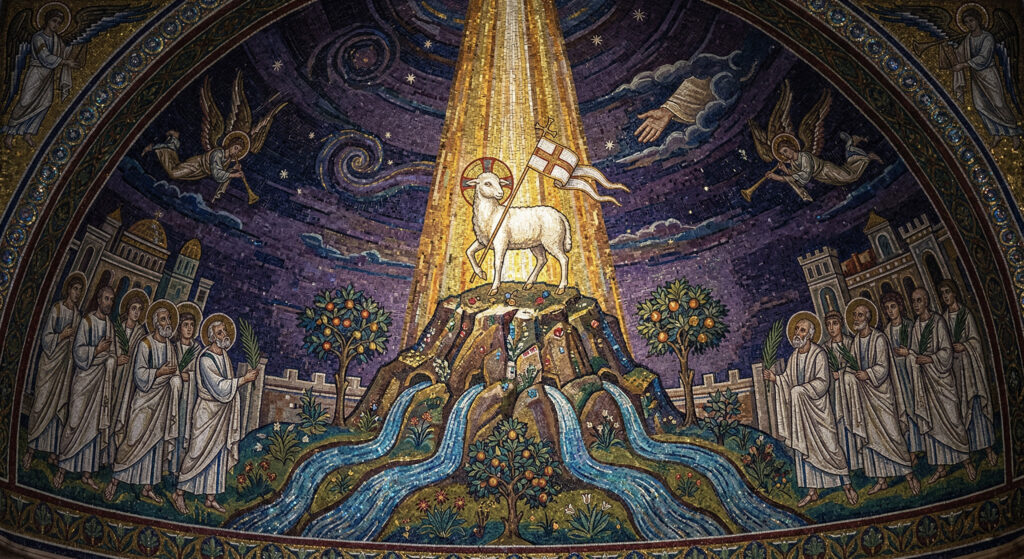
John 1:29: “The next day John seeth Jesus coming unto him, and saith, Behold the Lamb of God, which taketh away the sin of the world”.
This history-altering declaration by John the Baptist integrates several Old Testament types and relies most heavily on the Passover narrative to convey its meaning. To a first-century audience, the sudden identification of a man as a “lamb” was astounding.
A lamb was not a symbol of a conquering animal species or a royal king. The lamb was the vulnerable creature of atonement, the animal of the Passover, the symbol of innocent blood spilled to atone for others. By identifying the Lord, Jesus, as the “Lamb of God,” John signifies that while millions of sacrificial lambs had been offered by men from their own flocks, this ultimate, sufficient sacrifice was uniquely provided by God Himself.
This designation powerfully fuses the Passover lamb of Exodus 12, which spared the firstborn and judgment in individual households, with the daily morning and evening sacrifices of the tabernacle (Exodus 29:38-39: “Now this is that which thou shalt offer upon the altar; two lambs of the first year day by day continually. The one lamb thou shalt offer in the morning; and the other lamb thou shalt offer at even:” ), and the prophetic Suffering Servant of Isaiah.
Isaiah 53:7-11 prophesied this silent submission centuries prior: “He was oppressed, and he was afflicted, yet he opened not his mouth: he is brought as a lamb to the slaughter, and as a sheep before her shearers is dumb, so he openeth not his mouth. He was taken from prison and from judgment: and who shall declare his generation? for he was cut off out of the land of the living: for the transgression of my people was he stricken.
And he made his grave with the wicked, and with the rich in his death; because he had done no violence, neither was any deceit in his mouth. Yet it pleased the LORD to bruise him; he hath put him to grief: when thou shalt make his soul an offering for sin, he shall see his seed, he shall prolong his days, and the pleasure of the LORD shall prosper in his hand. He shall see of the travail of his soul, and shall be satisfied: by his knowledge shall my righteous servant justify many; for he shall bear their iniquities”.
The scope of redemption is expanded infinitely in John’s declaration. The Passover lamb saved a single family; the Day of Atonement sacrifice covered a single nation, but the precious Lamb of God takes away, removes, forgives, and accomplishes the Greek aphesis to take away the sin of the entire world.
The Exodus Lamb Maps Directly Onto the Narrative Of Christ With Precision
- The Four-Day Inspection: Just as the Passover lamb was selected and brought into the house four days prior to the sacrifice (Exodus 12:3-6), Jesus entered Jerusalem on a donkey four days before His crucifixion. During this period, He was subjected to intense scrutiny by religious leaders, high priests, and Roman authorities, mirroring the inspection of the lamb for physical defects.
- Without Blemish: The lamb was required to be physically flawless (Exodus 12:5). Christ was found to be morally and spiritually without blemish, innocent of sin, thereby qualifying Him as a perfect sacrifice of atonement (1 Peter 1:18-19).
- The Prime of Life: The lamb was to be a male of the first year, representing the prime of its life. Jesus atoned in the prime of His adulthood, at thirty-three years of age.
- The Substitutionary Firstborn: The Exodus lamb died in place of the firstborn of the Israelites. Christ, described as the “firstborn of many brethren,” died as a substitute for humanity, reconciling believers to God. Romans 8:29 establishes this spiritual lineage: “For whom he did foreknow, he also did predestinate to be conformed to the image of his Son, that he might be the firstborn among many brethren”.
- The Application of Blood: Just as the Israelites sprinkled blood on their doorposts to find safety from divine judgment, believers who apply the blood of Christ to their lives are shielded from spiritual death and eternal separation from God. Romans 5:8-10 states: “But God commendeth his love toward us, in that, while we were yet sinners, Christ died for us. Much more then, being now justified by his blood, we shall be saved from wrath through him”.
The Last Supper & New Covenant
The transition from the shadow to the substance occurred within the Upper Room during the Last Supper. Luke 22:15-20 captures this momentous shift:
“And he said unto them, With desire I have desired to eat this passover with you before I suffer: For I say unto you, I will not any more eat thereof, until it be fulfilled in the kingdom of God. And he took the cup, and gave thanks, and said, Take this, and divide it among yourselves: For I say unto you, I will not drink of the fruit of the vine, until the kingdom of God shall come.
And he took bread, and gave thanks, and brake it, and gave unto them, saying, This is my body which is given for you: this do in remembrance of me. Likewise also the cup after supper, saying, This cup is the new testament in my blood, which is shed for you.”
In this profound, transitional moment, Jesus explicitly bridges the historical Exodus from Egypt with His imminent atonement on Golgotha.
He declares an intense, fervent desire (“With desire I have desired”) to partake in this specific Passover before His suffering, recognizing it as the observance of the Old Covenant as we entered the New Covenant.
At this table, the physical Passover of Moses immediately leads to the fulfillment through the institution of the Lord’s Supper.
Jesus takes the standard elements of the Passover feast—the unleavened bread of affliction and the cup—and sovereignly reassigns their symbolism. The bread that represents the haste and affliction of the departure from Egypt becomes the direct symbol of His own body, which is about to be given and broken during the atonement on the cross. The cup is transformed from a memorial of the blood painted on the doorposts in Goshen to the “new testament in my blood, which is shed for you.” AMEN.
The Apostle Paul reiterates this liturgical command to the early church in 1 Corinthians 11:23-26: “For I have received of the Lord that which also I delivered unto you, That the Lord Jesus the same night in which he was betrayed took bread: And when he had given thanks, he brake it, and said, Take, eat: this is my body, which is broken for you: this do in remembrance of me.
After the same manner also he took the cup, when he had supped, saying, This cup is the new testament in my blood: this do ye, as oft as ye drink it, in remembrance of me. For as often as ye eat this bread, and drink this cup, ye do shew the Lord’s death till he come”.
This singular act fulfills the underlying promise and trajectory of Passover. The blood of the Old Covenant lambs spared the Israelites from physical death and Egyptian bondage for a season; the blood of the New Covenant secures eternal deliverance from the bondage of sin and the permanent penalty of spiritual death.
Jesus introduces a vital eschatological dimension, stating He will not eat or drink of it again until it is fulfilled in the Kingdom of God.
The Passover traces a powerful arc: it originates in the historical deliverance in Egypt, finds its substance in the substitutionary atonement on the cross, is commemorated continuously by the Church in the Eucharist, and anticipates its ultimate fulfillment in the future messianic banquet at the consummation of the age.
Aligning Shadows and Substance
To fully apprehend the typological symmetry between the institution of the Passover in Exodus and the New Testament, one must analyze the precise mapping of historical shadows to their spiritual substance.
| Old Testament Shadow (Exodus 12) | New Testament Substance (Christ & the Church) | Significance and Implications |
| The Unblemished Lamb Exodus 12:5: “Your lamb shall be without blemish, a male of the first year…” | The Sinless Savior 1 Peter 1:19: “But with the precious blood of Christ, as of a lamb without blemish and without spot:” Hebrews 7:26: “For such an high priest became us, who is holy, harmless, undefiled, separate from sinners…” | Only a morally perfect, completely innocent sacrifice is capable of satisfying divine justice and providing an infinite ransom for human depravity. |
| Separation of the Lamb Exodus 12:3-6: “In the tenth day… take to them every man a lamb… keep it up until the fourteenth day…” | Appointment of Christ Mark 11:1-11: Entering Jerusalem during Palm Sunday, days before His passion to be examined by authorities. | The atoning sacrifice was not a historical coincidence but a deeply premeditated, divinely appointed substitution. |
| Shedding of Blood Exodus 12:6-7: “…the whole assembly… shall kill it in the evening. And they shall take of the blood, and strike it on the two side posts…” | The Crucifixion Colossians 1:20: “And, having made peace through the blood of his cross, by him to reconcile all things unto himself…” 1 John 1:7: “…the blood of Jesus Christ his Son cleanseth us from all sin.” | Deliverance from sin requires the payment of a life; forgiveness cannot occur without the shedding of blood to satisfy divine justice. |
| Sprinkling on Doorposts Exodus 12:7, 22: “…strike the lintel and the two side posts with the blood… and none of you shall go out at the door…” | Individual Appropriation Hebrews 9:14: “How much more shall the blood of Christ… purge your conscience from dead works to serve the living God?” Hebrews 10:22: “…having your hearts sprinkled from an evil conscience…” | Atonement requires visible, applied substitution. The wrath of God passes over those who are explicitly sheltered by the applied blood by faith. |
| The “Destroyer” Passes Over Exodus 12:12-13, 23: “For the Lord will pass through to smite the Egyptians… the Lord will pass over the door…” | Deliverance from Wrath Romans 5:9: “Much more then, being now justified by his blood, we shall be saved from wrath through him.” 1 Thessalonians 1:10: “…even Jesus, who delivered us from the wrath to come.” | The Exodus from physical slavery typifies the cosmic exodus from spiritual depravity, transferring believers from darkness to light. |
| Unleavened Bread Exodus 12:15, 39: “Seven days shall ye eat unleavened bread; even the first day ye shall put away leaven out of your houses…” | A Holy Life 1 Corinthians 5:7-8: “Purge out therefore the old leaven… let us keep the feast, not with old leaven, neither with the leaven of malice and wickedness; but with the unleavened bread of sincerity and truth.” | Deliverance from the penalty of sin necessitates a departure from the practice of sin. The redeemed community must continuously operate in righteousness. |
| Bitter Herbs Exodus 12:8: “…with bitter herbs they shall eat it.” | Repentance and Self-Denial Acknowledging the bitterness of past sin and maintaining solemn reverence in communion with God. | The joy of deliverance is deepened by the sobering, continuous remembrance of the bitter cost of the consequences of human sin. |
| Unbroken Bones Exodus 12:46: “…neither shall ye break a bone thereof.” | Prophetic Fulfillment John 19:36: “For these things were done, that the scripture should be fulfilled, A bone of him shall not be broken.” | Demonstrates absolute sovereign control over redemption; despite bearing the curse, the core integrity of the sacrifice remains intact. |
| Communal Feast Exodus 12:47: “All the congregation of Israel shall keep it.” | The Lord’s Supper 1 Corinthians 11:23-26: The Church community is unified as one body, partaking in the communion of Christ’s sacrifice. | The redeemed community functions corporately; redemption creates a new fellowship gathered around the provision of the Lamb. |
| Judgment of Egyptian Gods Exodus 12:12: “…against all the gods of Egypt I will execute judgment: I am the Lord.” | Defeat of Principalities Colossians 2:15: “And having spoiled principalities and powers, he made a shew of them openly, triumphing over them in it.” | Salvation is both a rescue for the victim and a decisive, cosmic victory over the forces of darkness and systemic oppressive structures. |
Corporate Leadership & Christian Women

The historical and theological narrative of the Passover—deliverance from oppressive bondage, the preservation of community through intercession—translates seamlessly into the modern corporate environment. For Christian women in executive leadership, the modern workplace is not merely a secular center of commerce, but a vital community of stewardship, influence, and divine placement. As career professionals, our architecture of redemption is highly relevant to boardrooms, organizational management, and corporate culture.
The Esther 4:14 Paradigm: “For Such a Time as This”
While the Passover narrative details a collective deliverance orchestrated through Moses, the Book of Esther provides a highly individualized, profound template for corporate courage that echoes the exact same themes of risk, intercession, and community salvation.
Esther was born into a divinely orchestrated, beautiful story that unfolds against the backdrop of an existential threat to the Jewish people, orchestrated by Haman, a high-ranking royal vizier whose systemic prejudice parallels modern institutional toxicities, unethical monopolies, and corporate injustices.
In Esther 4:14, her cousin Mordecai delivers a pivotal, defining ultimatum regarding her proximity to power. This single verse establishes the ultimate paradigm of divine providence in career placement and corporate advancement. It insists that a woman’s ascent to the C-suite, a board of directors, or any position of significant corporate influence is not a random accident of market forces, networking, or mere ambition, but a deliberate sovereign appointment designed for a specific, often challenging, purpose.
As modern executives, we internalize this paradigm and navigate corporate restructuring, ethical dilemmas, and hostile work environments not as passive participants but as divinely appointed stewards whose presence is essential to preserving institutional integrity and advocating within the corporate ecosystem.
Servant Leadership & Our Power Of Persuasion

Bridging the gap between the Passover Lamb’s ultimate sacrifice and biblical Esther’s calculated corporate courage reveals a unified theory of our Christian leadership and stewardship.
The Lord Jesus Christ modeled leadership by prioritizing personal character and integrity and elevating His team, directly contrasting with traditional hierarchical management models that rely on dominance and coercion.
For the modern corporate Christian woman, our operating model translates into specific, operational business skills. The integration of 1 Corinthians 13 becomes our definitive framework for emotional intelligence and interpersonal management.
The Apostle Paul maps out our anatomy of true leadership and ethical behavior in 1 Corinthians 13:4-8: “Charity suffereth long, and is kind; charity envieth not; charity vaunteth not itself, is not puffed up, Doth not behave itself unseemly, seeketh not her own, is not easily provoked, thinketh no evil; Rejoiceth not in iniquity, but rejoiceth in the truth; Beareth all things, believeth all things, hopeth all things, endureth all things. Charity never faileth: but whether there be prophecies, they shall fail; whether there be tongues, they shall cease; whether there be knowledge, it shall vanish away”.
Actionable Strategies & Executive Influence:
| Strategic Leadership Skill | Biblical Parallel | Corporate Application |
| Clear Communication | The explicit, unambiguous instructions given for the Passover preparations (Exodus 12). | Avoiding corporate ambiguity. Set precise expectations in emails and meetings to ensure teams know exactly what to execute without micromanagement. |
| Astute Delegation | Jesus delegating the Great Commission to His disciples; Moses relying on Aaron and the elders. | Recognizing that an executive cannot function in isolation. Placing the right personnel in roles where their specific skills allow them to flourish. |
| Persuasion Over Coercion | Esther hosting a banquet to build relational capital before presenting her case to the King. | Listening to stakeholders, identifying their needs, and tailoring messages to achieve ethical consensus without relying on deception or brute authority. |
| Organizational Management | The structural hierarchy developed during the wilderness wanderings. | Navigating complex vertical and horizontal corporate structures, ensuring strategic alignment across multiple departments. |
| Unconditional Acceptance | “Charity suffereth long, and is kind… endureth all things” (1 Corinthians 13:4-7). | Serving the team first. Measuring success not just by profit margins, but by the personal and professional growth, psychological safety, and well-being of employees. |
Chag Sameach! #Passover
How The Passover Points to Christ’s Atonement